The History of Chabad
Brief History:
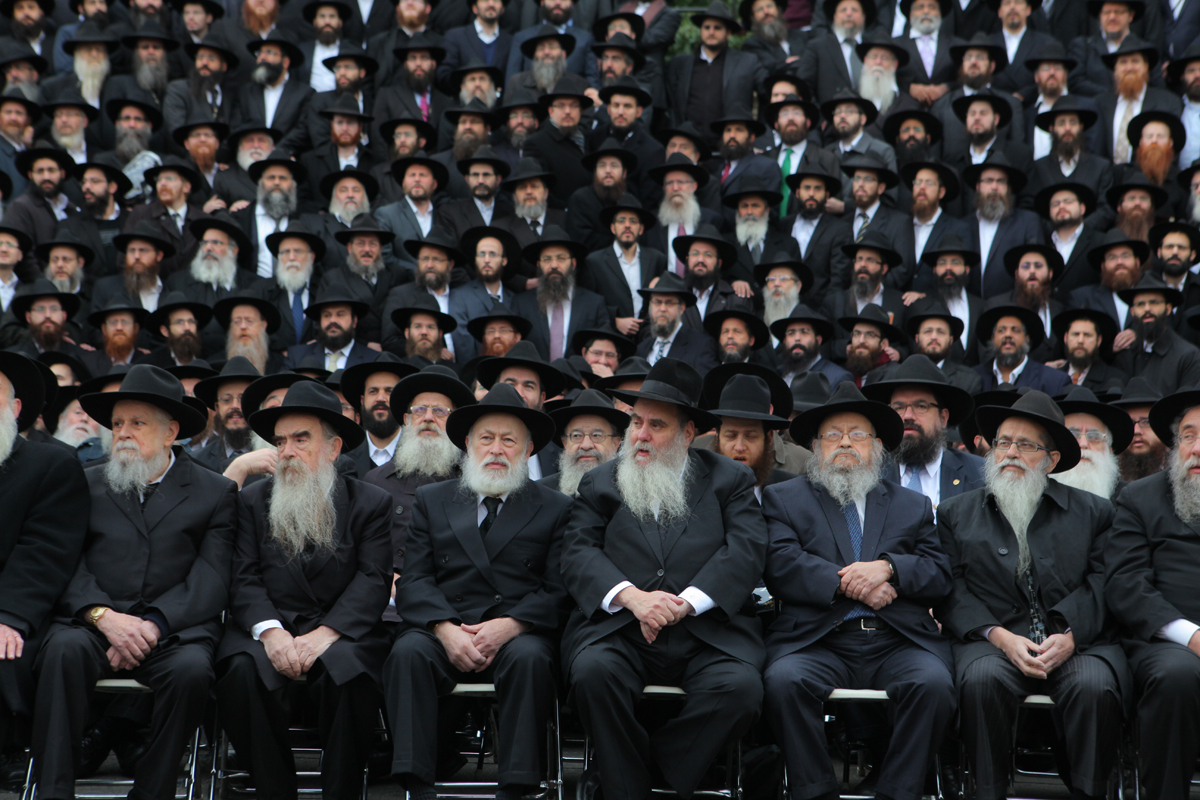
The Chabad movement was established after the First Partition of Poland in the town of Liozno, Pskov Governorate, Russian Empire (now Liozna, Belarus), in 1775, by Shneur Zalman, a student of Dov Ber of Mezeritch, the successor to Hasidism's founder, Rabbi Israel Baal Shem Tov. Rabbi Dovber Shneuri, the Second Rebbe, moved the movement to Lyubavichi (Yiddish: ליובאַװיטש, Lyubavitsh), in current-day Russia, in 1813. The movement was centered in Lyubavichi for a century until the fifth Rebbe, Rabbi Shalom Dovber left the village in 1915 and moved to the city of Rostov-on-Don. During the interwar period, following Bolshevik persecution, the Chabad-Lubavitch movement, under the Sixth Rebbe, Rabbi Yosef Yitzchak, was centered in Riga and then in Warsaw. The outbreak of World War II led the Sixth Rebbe to move to the United States. Since 1940, the movement's center has been in the Crown Heights neighborhood of Brooklyn. While the movement spawned a number of offshoot groups throughout its history, the Chabad-Lubavitch branch is the only one still active, making it the movement's main surviving line. Historian Jonathan Sarna has characterized Chabad as having enjoyed the fastest rate of growth of any Jewish religious movement in the period 1946–2015. In the early 1900s, Chabad-Lubavitch legally incorporated itself under Agudas Chasidei Chabad ("Association of Chabad Hasidim"). In the 1980s, tensions arose between Chabad and Satmar Chasidim as a result of several assaults on Chabad Hasidim by Satmar Hasidim. The Chabad movement was subjected to governmental oppression in Russia. The Russian government, first under the Czar, later under the Bolsheviks, imprisoned all but one of the Chabad rebbes. The Bolsheviks also imprisoned, exiled and executed a number of Chabad Hasidim. During the Second World War, many Chabad Hasidim evacuated to the Uzbek cities of Samarkand and Tashkent where they established small centers of Hasidic life, while at the same time seeking ways to emigrate from Soviet Russia due to the government's suppression of religious life. The reach of Chabad in Central Asia also included earlier efforts that took place in the 1920s. Following the war, and well after the center of the Chabad movement moved to the United States, the movement remained active in Soviet Russia, aiding the local Jews known as Refuseniks who sought to learn more about Judaism. And throughout the Soviet era, the Chabad movement maintained a secret network across the USSR. Since the dissolution of the Soviet Union in 1991, state persecution of Chabad ceased. The Chief Rabbi of Russia, Berel Lazar, a Chabad emissary, maintains warm relations with Russian President Vladimir Putin. Lazar also received the Order of Friendship and Order "For Merit to the Fatherland" medals from him. The movement is guided by the teachings of its seven leaders (“Rebbes”), beginning with Rabbi Schneur Zalman of Liadi of righteous memory (1745–1812). These leaders expounded upon the most refined and delicate aspects of Jewish mysticism, creating a corpus of study thousands of books strong. They personified the age-old Biblical qualities of piety and leadership, and they concerned themselves not only with their own movement, but with the totality of Jewish life, spiritual and physical. No person or detail was too small or insignificant for their love and dedication. In our generation, the Lubavitcher Rebbe, Rabbi Menachem Mendel Schneerson of righteous memory (1902–1994), known simply as “the Rebbe,” emerged as the leader of post-holocaust Jewry who brought the teachings of the Chabad movement to virtually every Jewish community on the face of the globe. The origins of today’s Chabad-Lubavitch organization can be traced to the early 1940s, when the sixth Lubavitcher Rebbe, Rabbi Yosef Yitzchak Schneersohn of righteous memory (1880–1950), appointed his son-in-law and later successor, Rabbi Menachem Mendel, to head the newly founded educational and social service arms of the movement. Motivated by his profound love for every Jew and spurred by his boundless optimism and self-sacrifice, the Rebbe set into motion a dazzling array of programs, services and institutions to serve every Jew. Today 4,000 full-time emissary families apply 250-year-old principles and philosophy to direct more than 3,500 institutions (and a workforce that numbers in the tens of thousands) dedicated to the welfare of the Jewish people worldwide.
SOURCE: WIKIPEDIA & CHABAD.ORG
Comments
Post a Comment